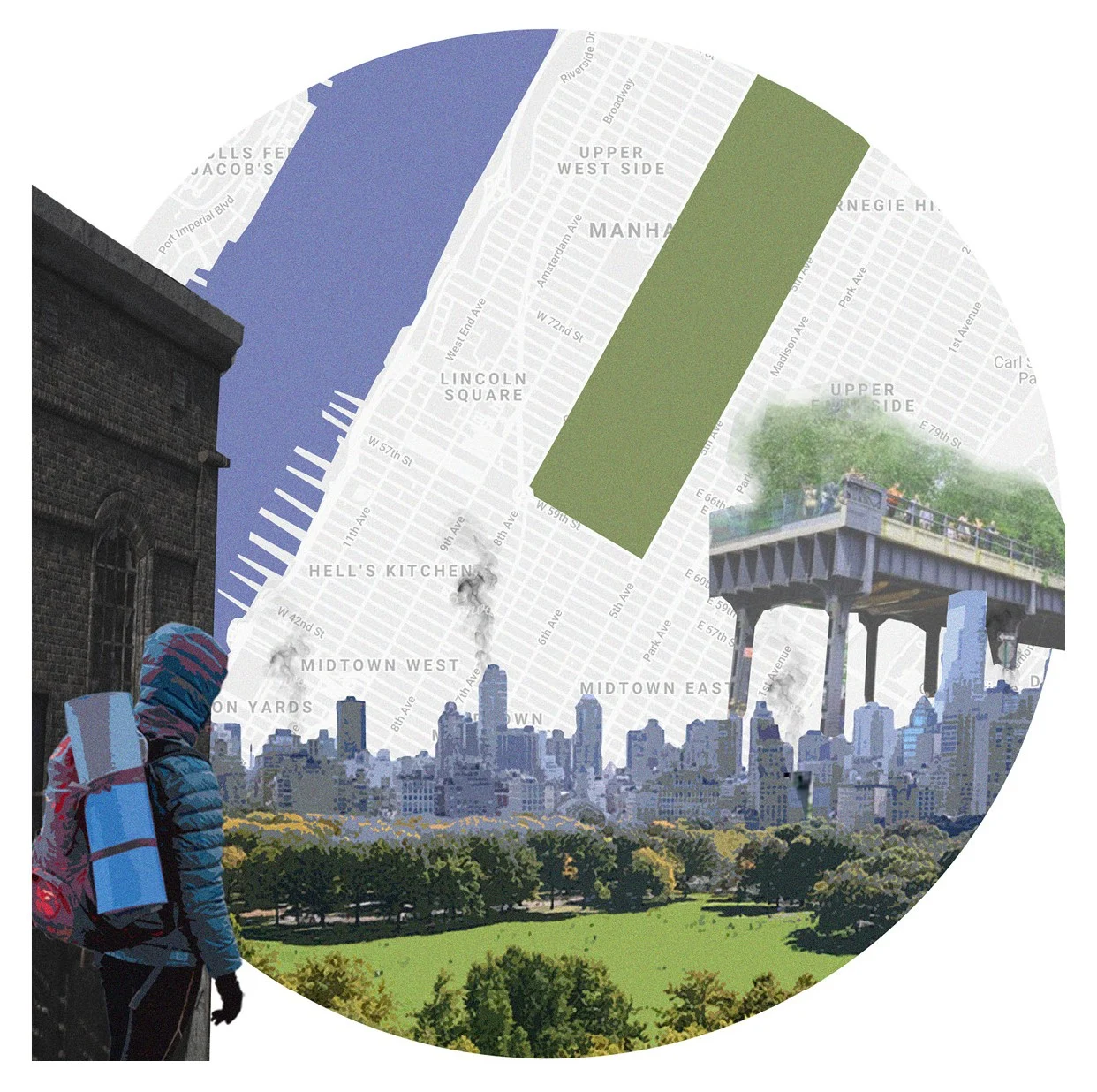
A vital lesson from 2020 is that civilization is strongest when it can adapt to adversity. The pandemic reshaped how we work, live, and socialize, exposing cities as major obstacles to flexibility. In dense urban environments, limited space made social distancing difficult and everyday activities risky. Cities like New York must evolve into systems that remain functional during crises such as a pandemic.
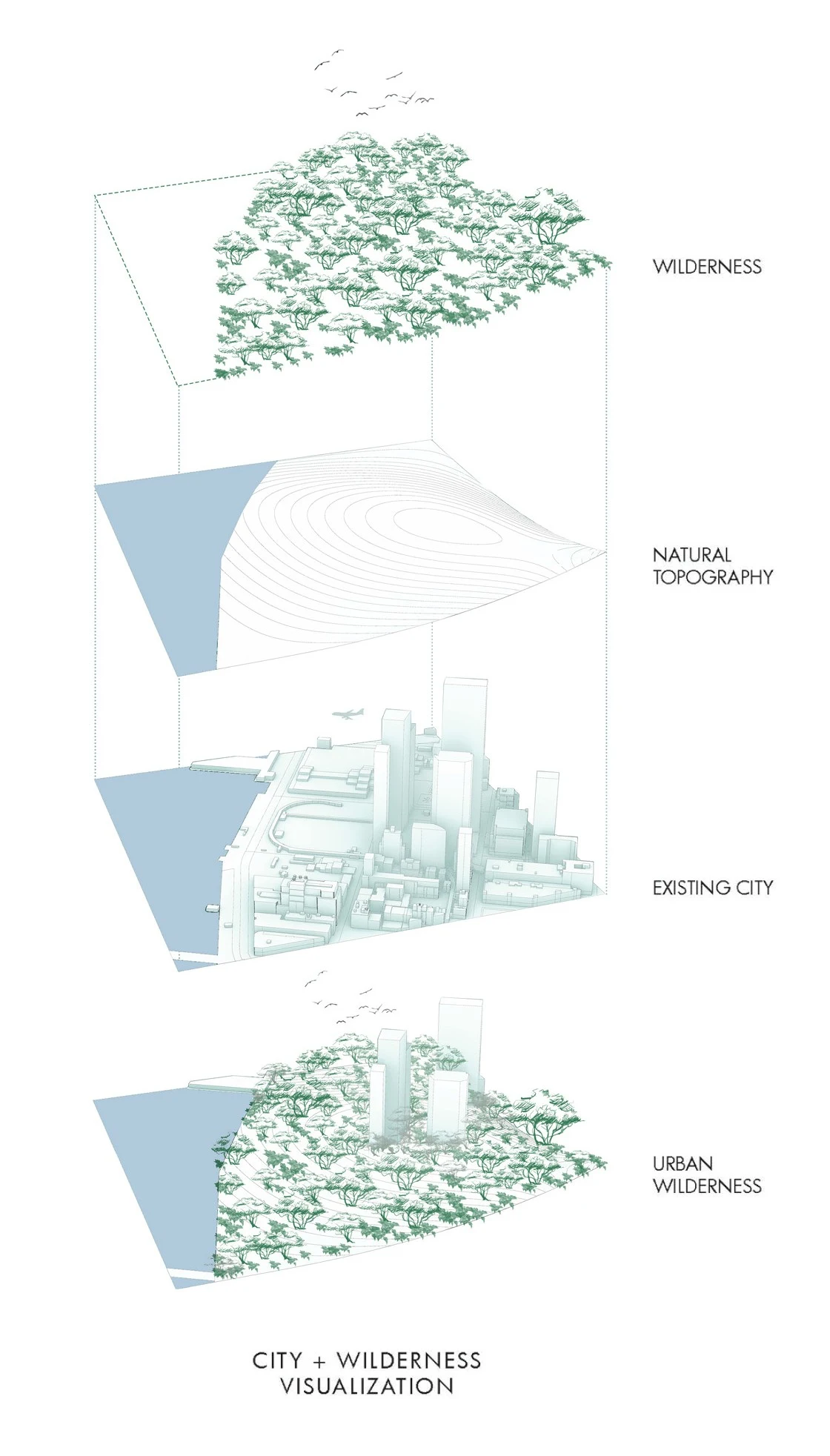
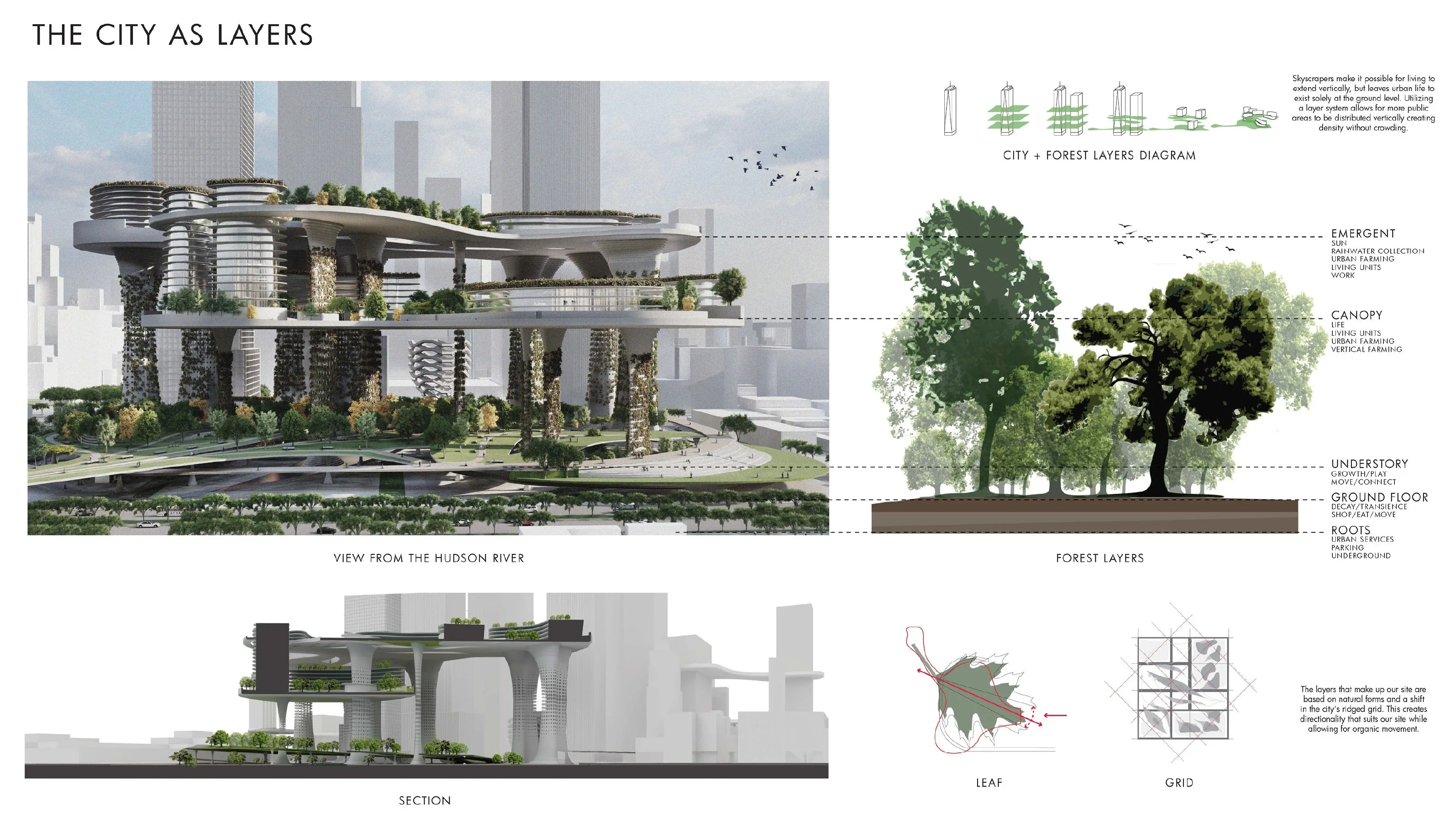
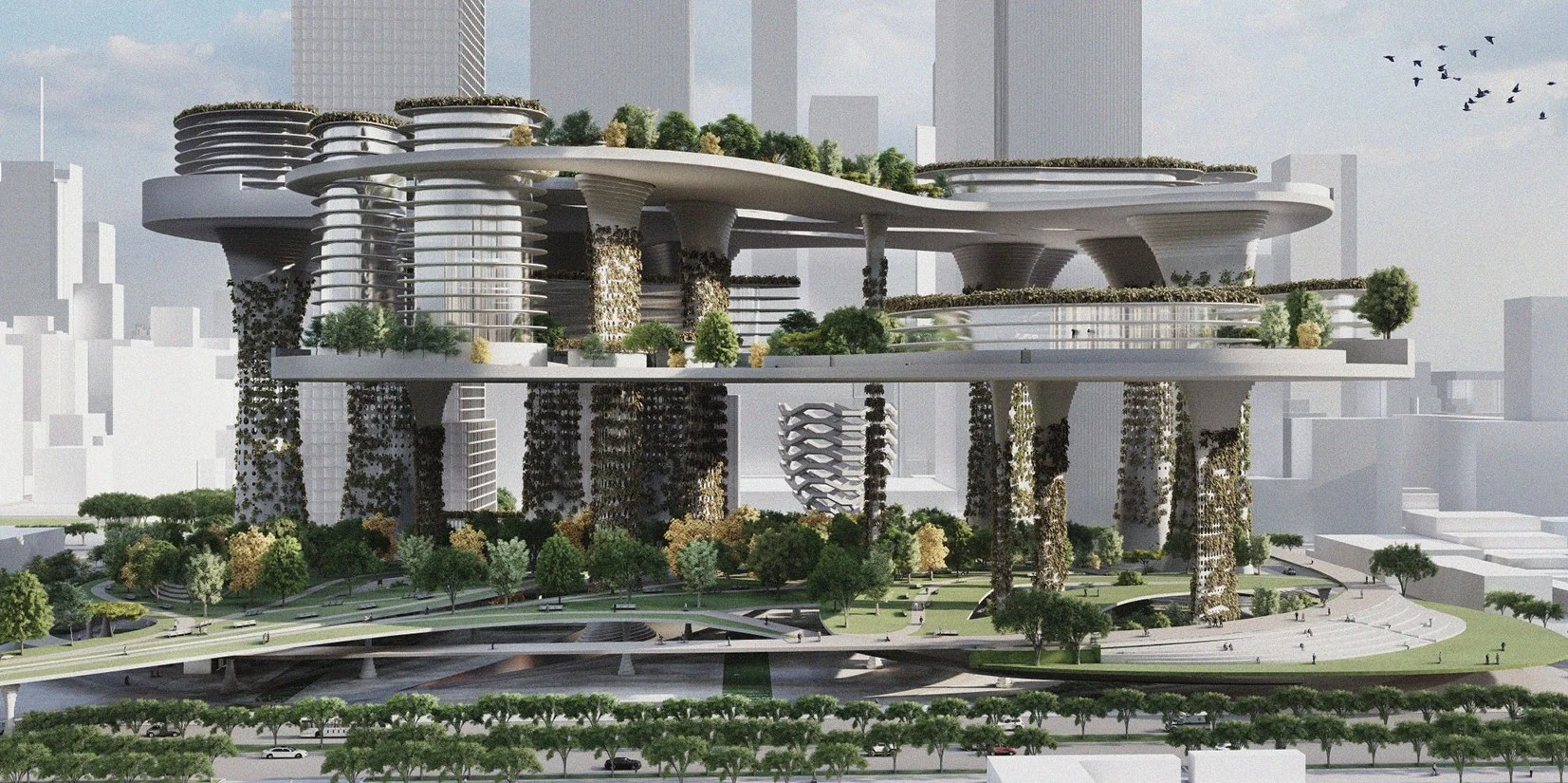
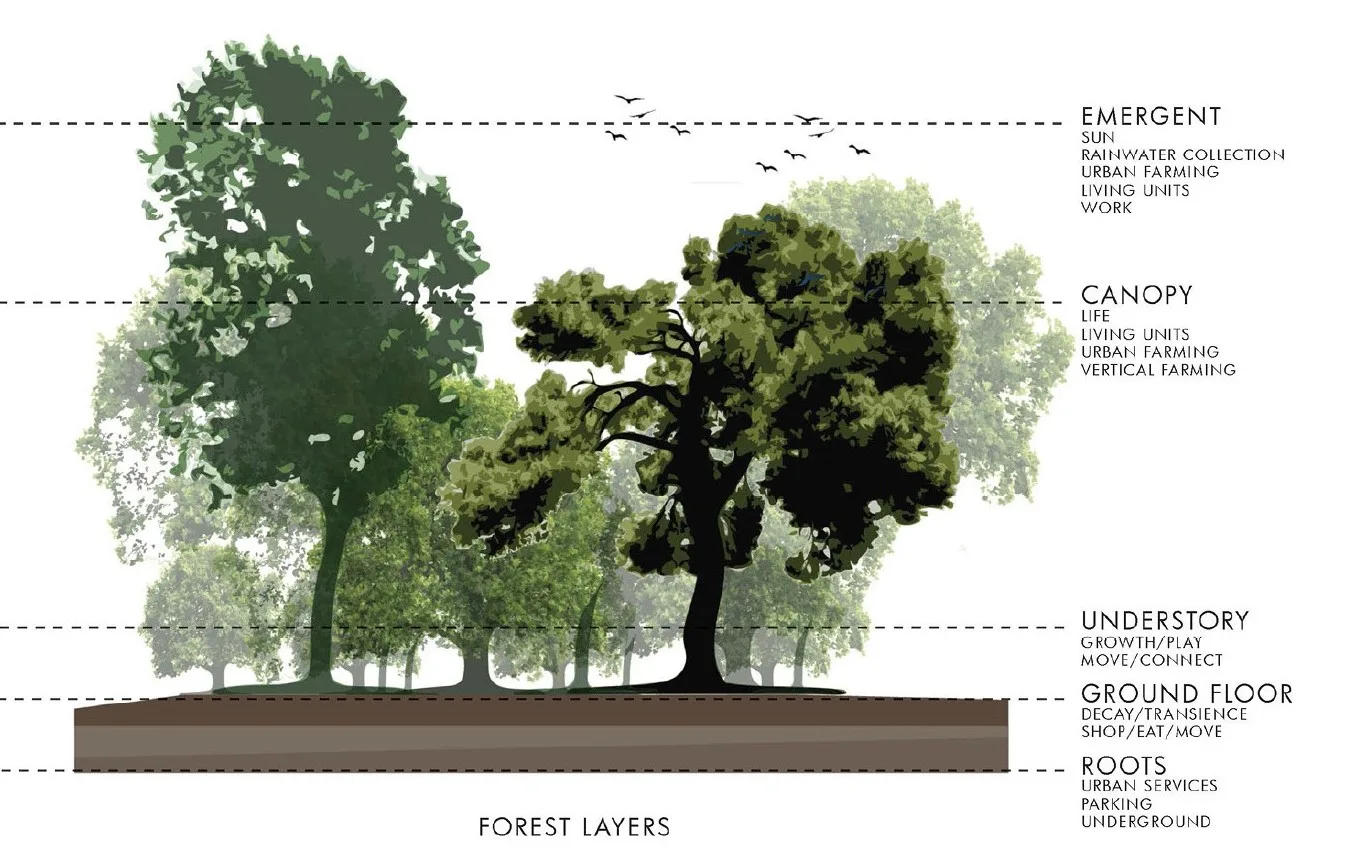
Urban Wilderness proposes a self-sufficient community modeled after a forest ecosystem. Forests are dense yet resilient systems organized into five layers—roots, ground, understory, canopy, and emergent—each supporting life as a whole and independently. This vertical organization is applied to the skyscraper, rethinking public life beyond the ground level. By distributing public space vertically, the system reduces crowding while supporting living, working, movement, and resources.
Although the layers function best together, they can operate independently when necessary. Upper layers include public amenities such as grocery stores, educational spaces, and vertical farming, allowing each layer to be isolated without disrupting the others.
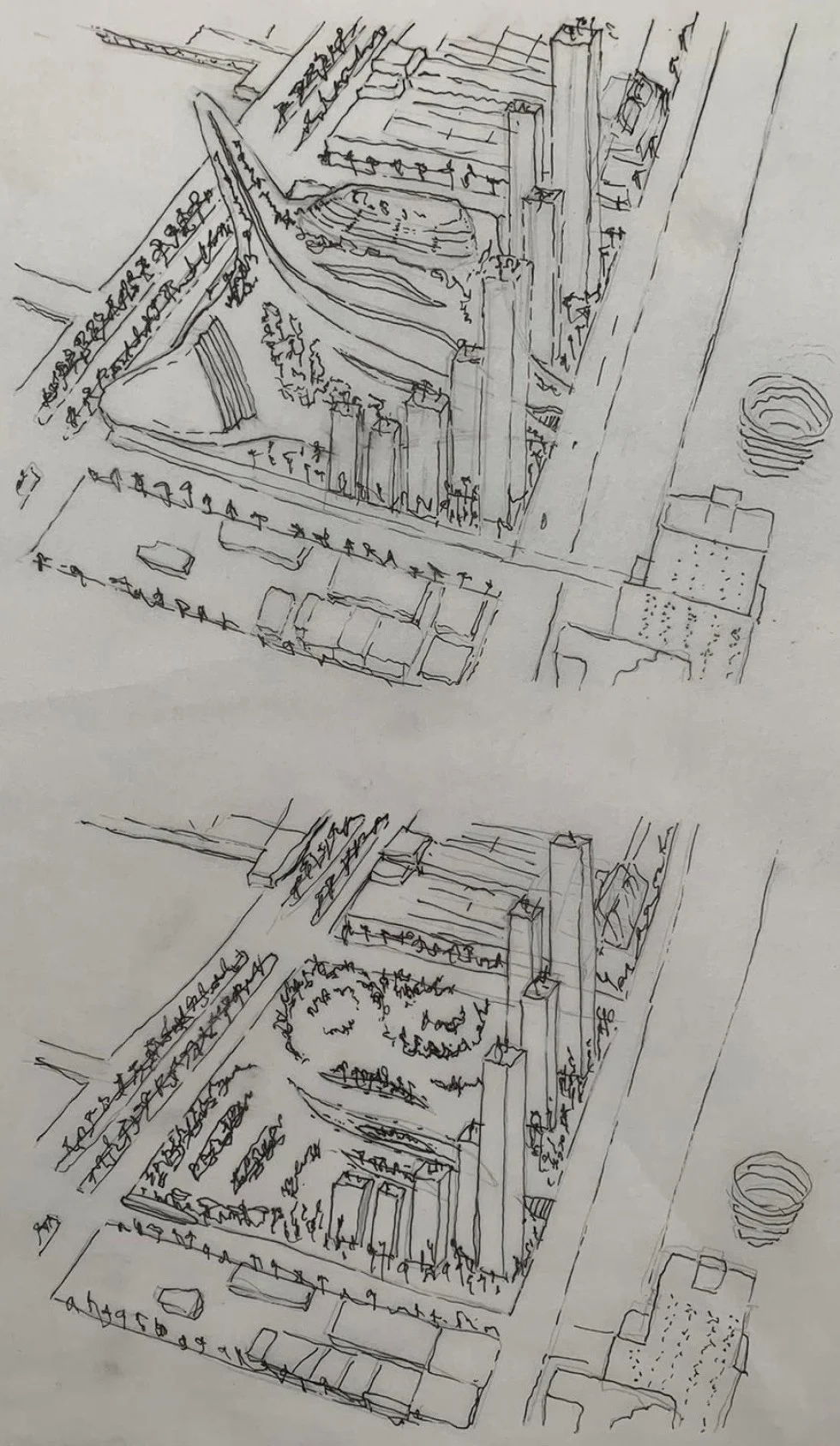
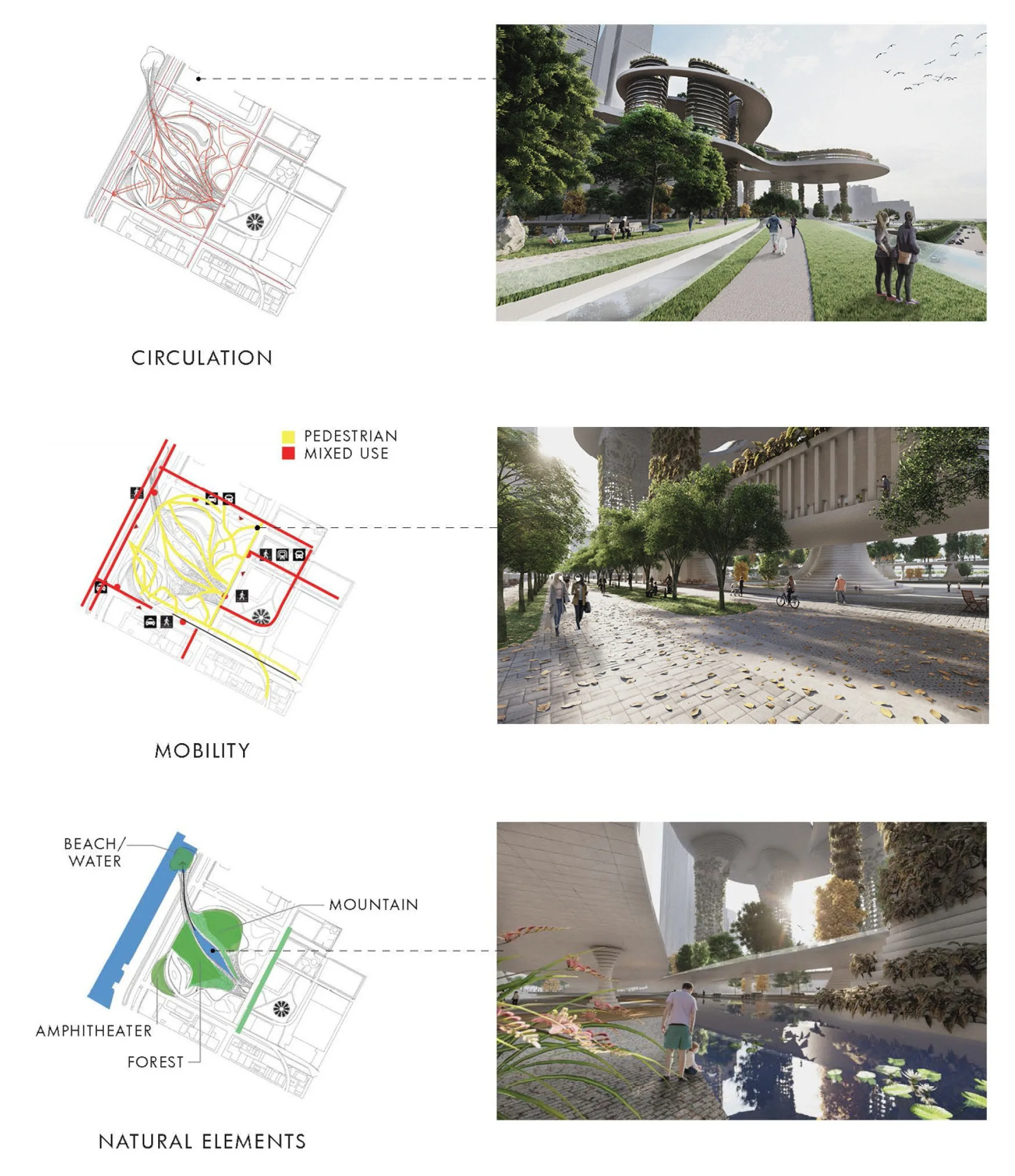
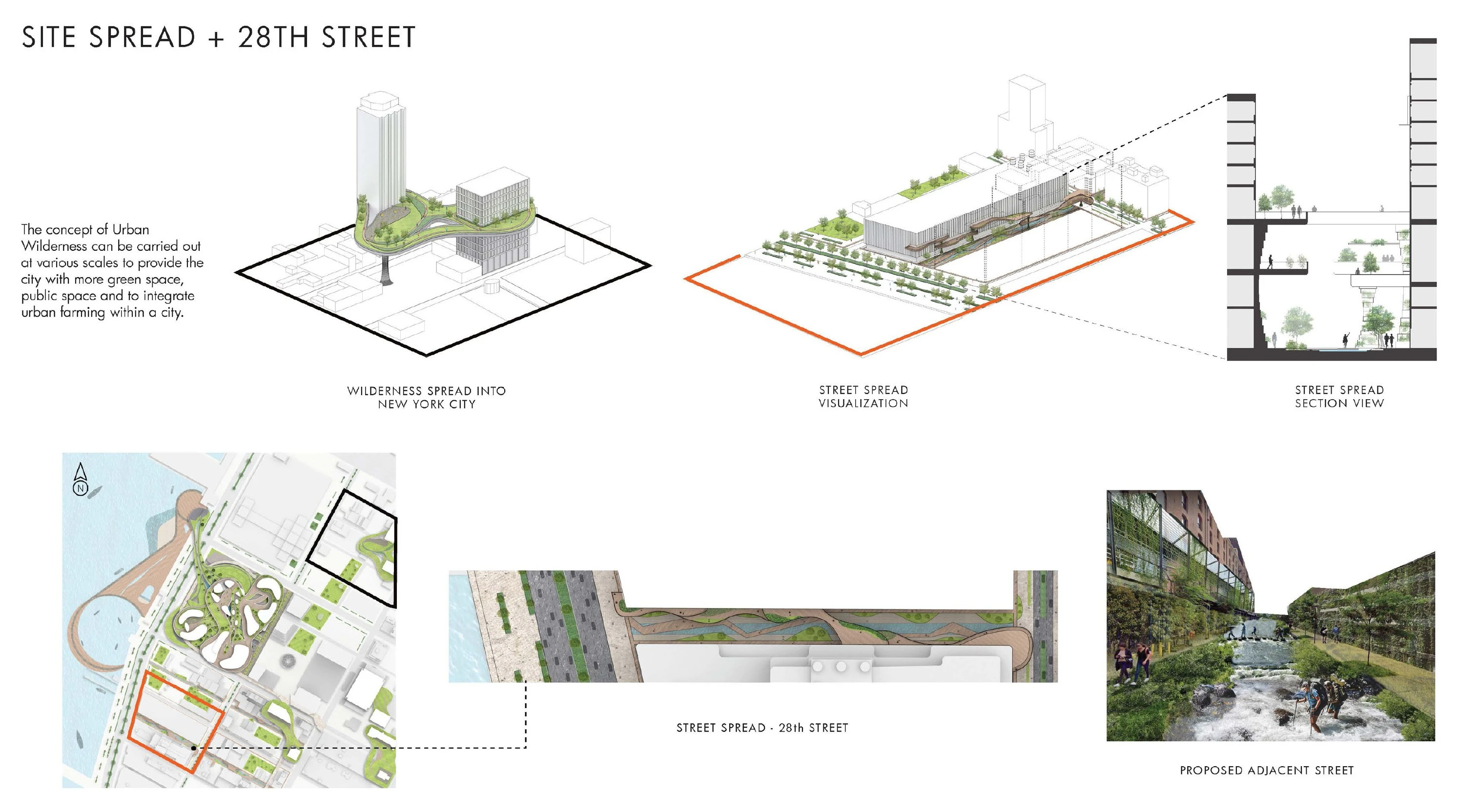
The concept can be implemented at multiple scales. At the street level, select vehicular roads become pedestrian corridors with elevated public spaces, green paths, farming, and water elements. These additions activate both street-level and vertical space, creating greener, more adaptable, and self-supporting neighborhoods.
This project addresses both pandemic resilience and the growing need for public space in New York City. By increasing density without crowding and integrating nature into the urban fabric, Urban Wilderness challenges the divide between public and private space. As cities continue to grow, this shift is not optional but necessary. Urban Wilderness is a catalyst for the future of urban life.
Concept
In order to achieve an urban wilderness, we studied the forest ecosystem and observed that it is made up of five main layers.
We thought "what if we applied this to the city?" By applying this system of different layers to our site, we found that it allows for public uses that are connected, adaptable, sustainable thus creating an escape in a dense urban setting.
Masterplan Layers
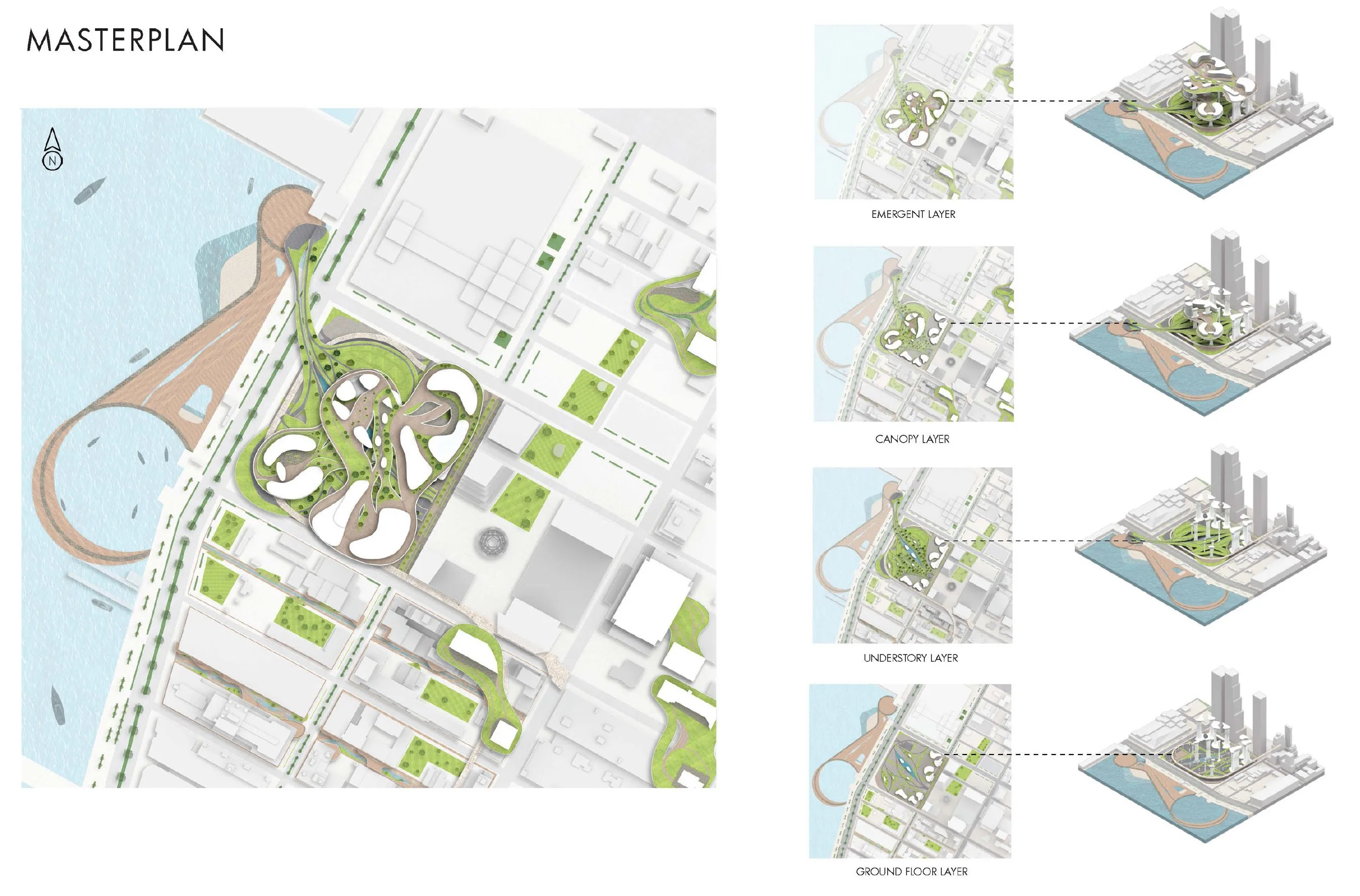
The ground floor layer includes park space, path from the vessel, dynamic walkups to the understory layer, space for transient functions, a beach and a water collection pool.
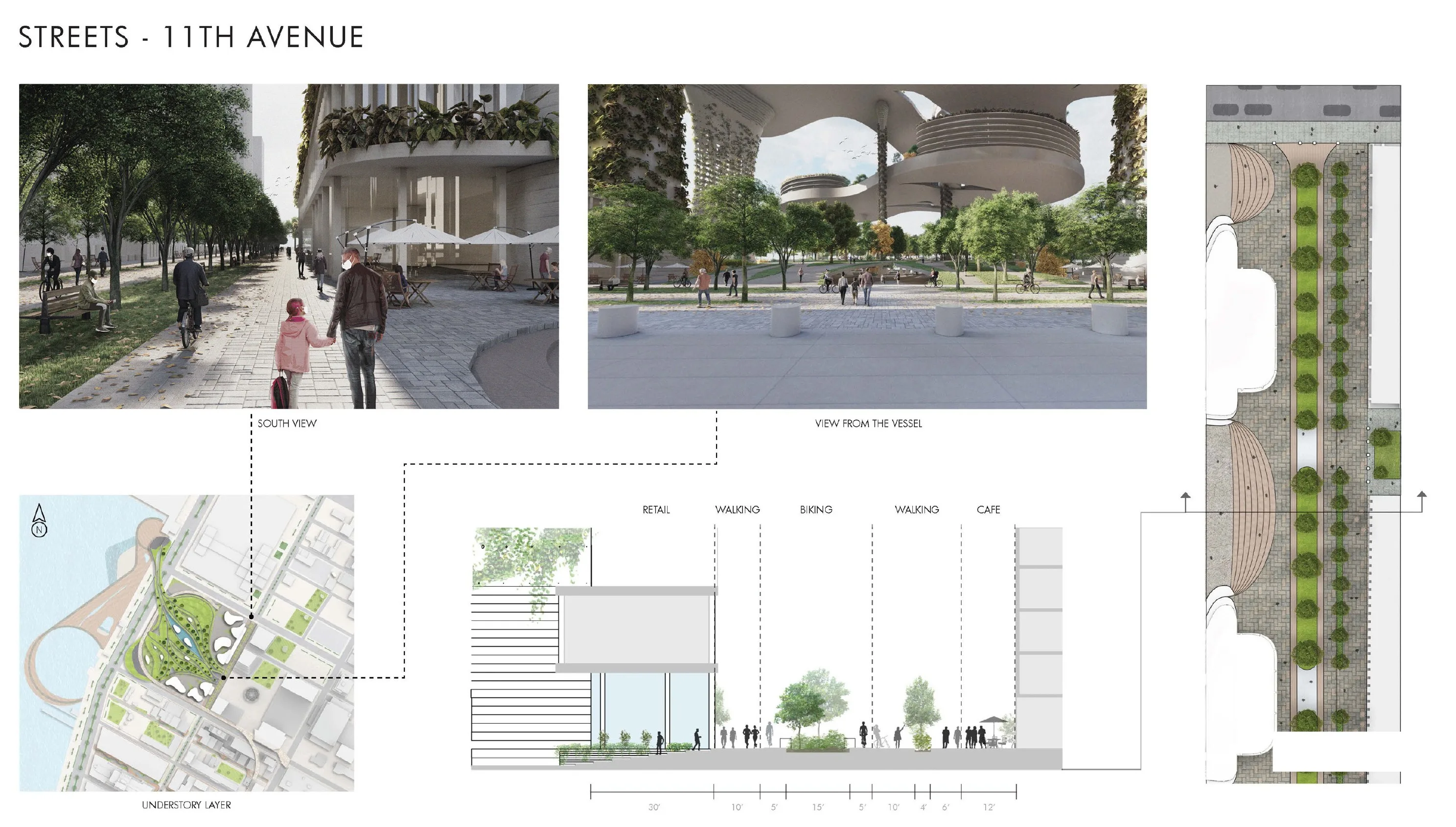
The Understory layer includes interactions with the high line, an amphitheater, gardening space, and a water walkway over the busy highway that leads to the beach.
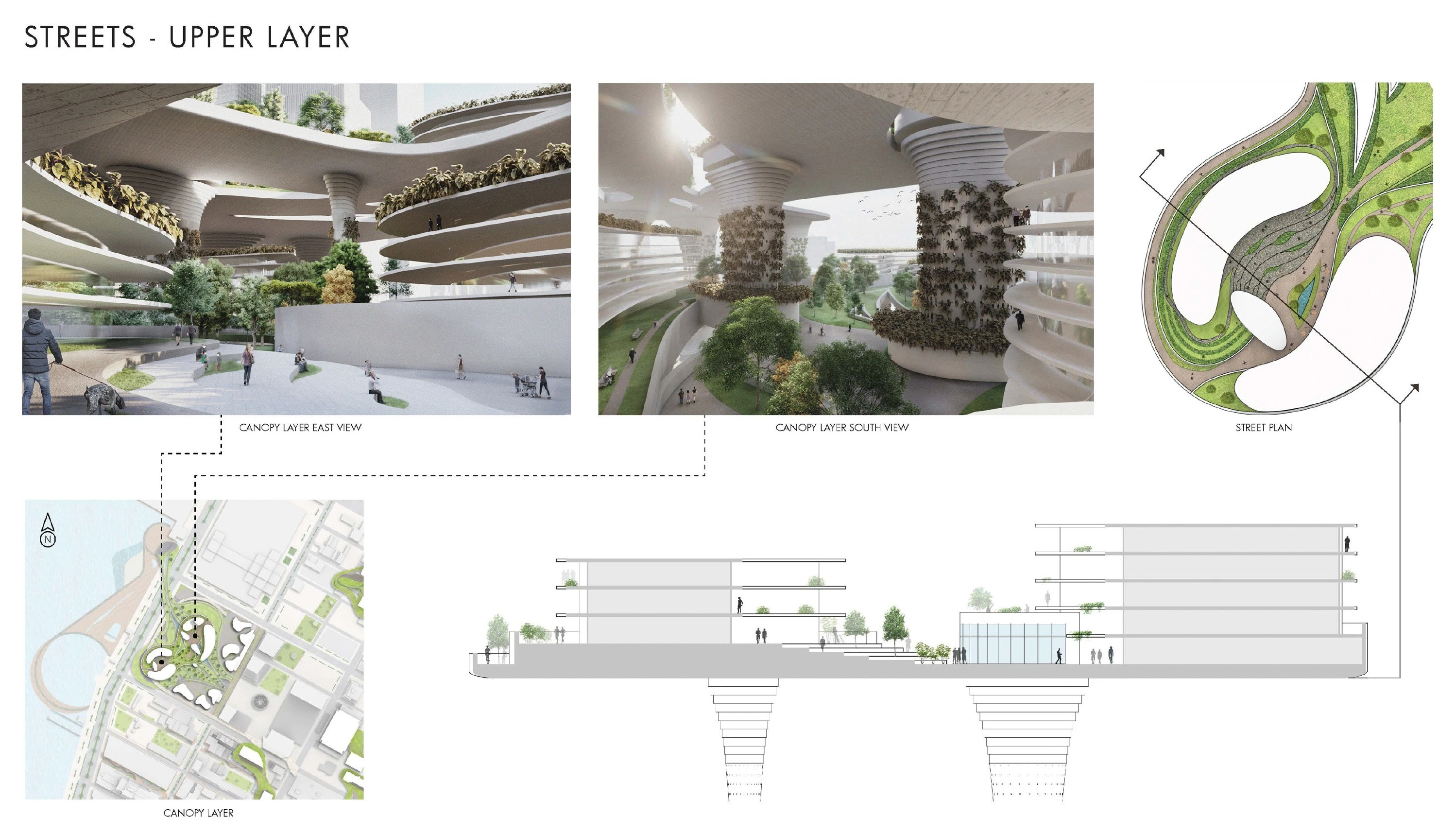
The Canopy layer has elevator structures that connect all layers as well as living and vertical gardening structures.
The Emergent layer is an extension of the canopy layer with living spaces, working spaces and copious green space.
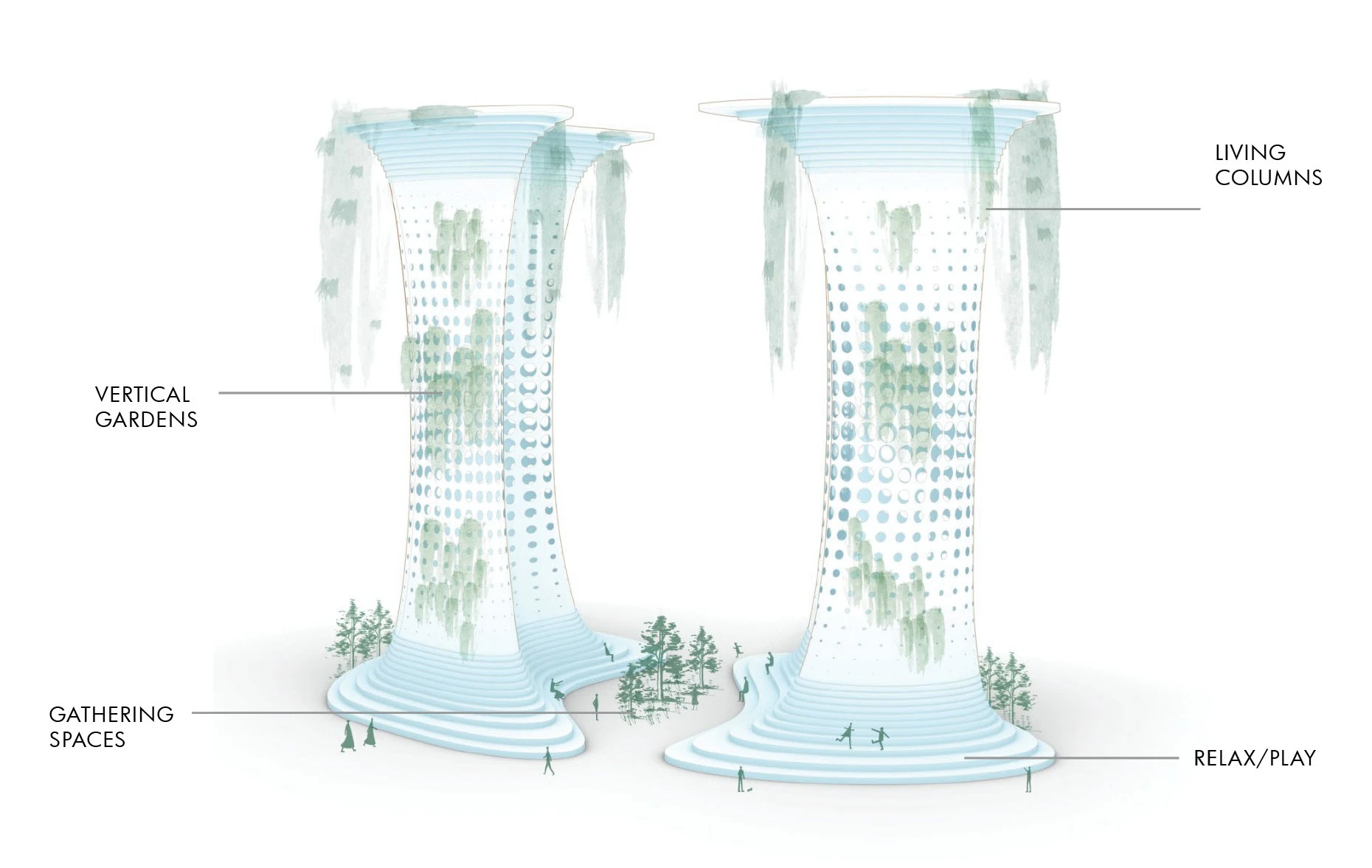
Green Columns
for structural support and vertical circulation while being the site's main food supply. They are the site's basis for sustainability and create retail spaces as well as gathering spaces at their base.
Usage Opportunities
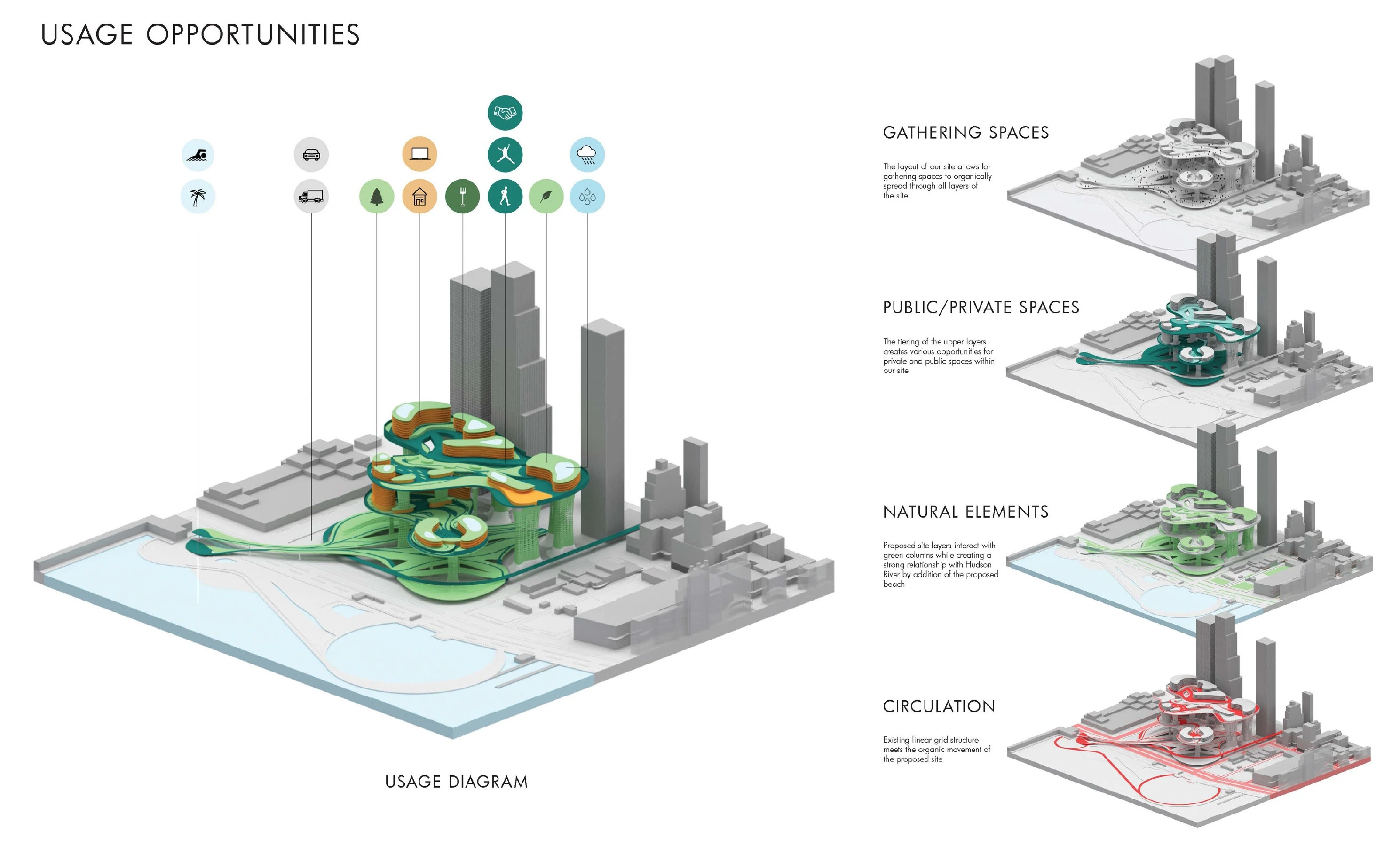
The layout of our site allows for gathering spaces lo organically spread through all layers of the site.
The tiering of the upper layers creates various opportunities for private and public spaces within our site.
Proposed site layers interact with green columns while creating a strong relationship with Hudson River by addition of the proposed beach.
Existing linear grid structure meets the organic movement of the proposed site.
Upper Layer
The upper layers provide for social distancing during a pandemic as well as functionally allow for optimum space and activity engagement throughout the site. The upper layers include commercial and residential functions which allow users to live and work in a more private area within the site.
11th Avenue
11th Avenue is our proposal for a converted pedestrian-friendly street. This pedestrian street will allow for a stronger engagement with the pre-existing Hudson Yards site as well as allowing for more engagement of the user with various aspects of our site including cafes, retail and nature. These elements increase person-to-person connection as well as site-to-person connection.
Transformation Beyond the Site
The concept of Urban Wilderness can be carried out at various scales to provide the city with more green space, public space and to integrate urban farming within a city.
Gallery